Empaths, are highly responsive to the emotional-feeling states of others while they receive them through the body. Ultra-Empaths may additionally register the cognitive-feeling direction beneath another person’s words, behaviors, and surface presentation, with an immediate sense of what remains unspoken. These gifts can accelerate a practitioner’s development toward Transferring Therapeutic Consciousness.
Why This Presentation?
Discover the five types of Empaths and why sensitivity becomes overwhelming when it is not understood, differentiated, and architected.
Many Empaths become overwhelmed in the presence of others despite using grounding, shielding, or energetic protection techniques. They may absorb emotions they did not generate, assume responsibility for moods they did not create, and confuse emotional resonance with their own identity.
An Ultra-Empath is someone whose nervous system is highly responsive to the cognitive-feeling states of others. They may feel-know what is unspoken more strongly than what is said. They sense the sadness behind someone’s smile, the irritation behind politeness, the loneliness behind success, the fear behind control, the wound behind anger.
The Empath must learn to say, “This is moving through me, but it may not belong to me.”
This sentence creates the first separation. Without that separation, the Empath absorbs. With that separation, the Empath perceives and learns to discern. The Empath must learn to distinguish their own emotional-feeling states while the Ultra-Empath must learn to distinguish cognitive-feeling states.
This presentation explores how Self-Other Distinction is needed in the empathic experience. Self-Other Distinction is not the end of the journey, it is the foundation upon which Therapeutic Mastery develops.
The “gifts” of Empaths and Ultra-Empaths can be difficult to carry. However, these „gifts” can also accelerate a practitioner’s development toward Therapeutic Mastery. Once Self-Other Distinction is developed, sensitivity becomes a clinical advantage rather than a personal burden.
The Empath practitioner often recognizes what traditional observation alone may overlook, including when a client’s sensitivity is mistaken for anxiety, emotional instability, excessive reactivity, or poor boundaries.
With Metacognition skills the Empath and Ultra-Empath begins to look through a microscope instead of a magnifying glass, practitioners begin to recognize structures, architectural elements and their relationships, and therapeutic possibilities that were always present but previously unseen.
The most powerful therapeutic influence in every session is Transferring Therapeutic Consciousness.
Key takeaways:
Practitioners who are Empaths may develop Therapeutic Mastery more rapidly because their nervous system already receives subtle information that many practitioners must first learn to notice. Once Self-Other Distinction develops, that sensitivity can become a clinical advantage rather than a personal burden.
When sensitivity is trained through Metacognition, Metaemotion, and Self-Other Distinction, the Empath no longer only absorbs the field. They learn to read it, differentiate it, and choose the State of Being the work requires.
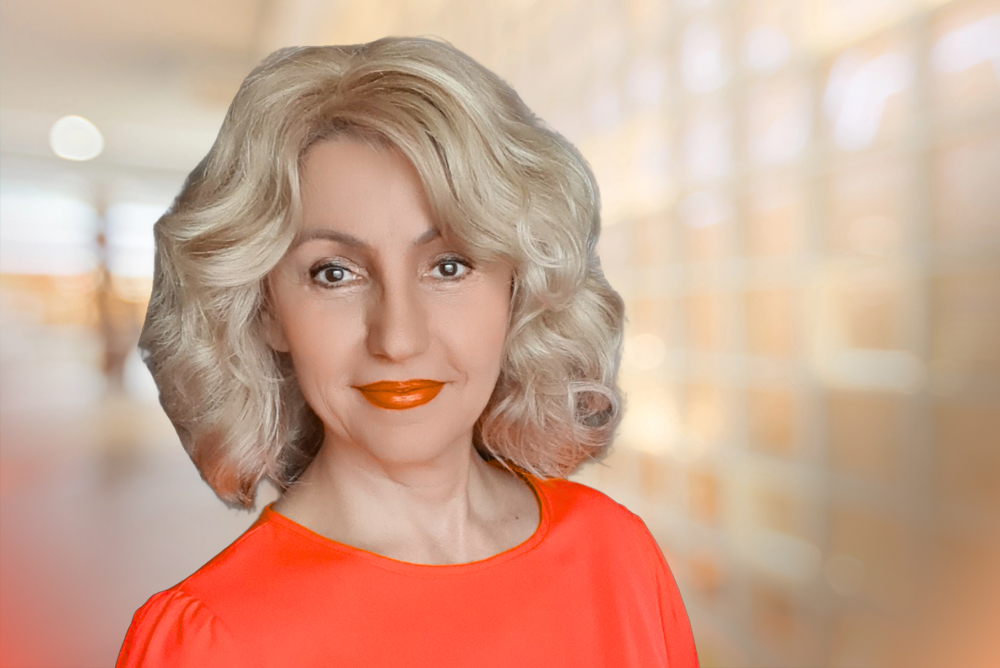
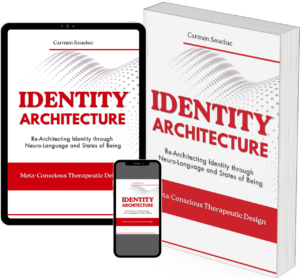
Carmen Sauciuc, BCHt, CHI, is a board-certified hypnotherapist, certified hypnosis instructor, neuro-coach, and internationally acclaimed author. She is the patent holder of Feelfulness® Meta-Conscious Therapeutic Design and Identity Architecture™, an integrated system that brings together depth psychology, hypnosis, neuroscience, metacognition, and spiritual psychology within a cohesive architecture of transformation.
Rather than simply introducing therapeutic techniques, Carmen’s work introduces missing distinctions that change how practitioners observe clinical work, think therapeutically, and develop Therapeutic Mastery.
Inspired by the work of Carl Jung, Milton Erickson, Antonio Damasio, Carl Rogers, and David R. Hawkins, Carmen trains practitioners to develop Therapeutic Mastery through Identity Architecture Work, generating Therapeutic States of Being, Word Triangles Neuro-Language, Metacognition, Alchemy and Transferring Therapeutic Consciousness.
When individuals train with Carmen Sauciuc, they do not simply learn additional techniques. They begin to perceive therapy differently. Through Identity Architecture™, they discover missing distinctions that reveal clinical patterns, therapeutic opportunities, and deeper structures of human experience that were previously invisible. For example: Identity-Level Work vs. Identity Architecture Work, Emotion vs. Emotional-Feeling, Feeling vs. State of Being, Empathy vs. Empath vs. Ultra-Empath, Therapeutic Presence vs. Transferring Therapeutic Consciousness, Neuro-Language vs. NLP, Word Triangles vs. Affirmations, Depotentiation vs. Double Bind vs. Therapeutic Dissonance, Alchemy vs. Mindset.
These distinctions not only change the resolution at which practitioners perceive therapy but become the foundation for greater precision, discernment, and Therapeutic Mastery. Like looking through a microscope instead of a magnifying glass, practitioners begin to recognize structures, and therapeutic possibilities that were always present but previously unseen.

Meet people who are growing, building, and thinking bigger—these aren’t casual conversations, they’re opportunities.

Discover tools, services, and opportunities that support your growth and expand what’s possible for you.

Break patterns, shift your mindset, and step into a new level of confidence, clarity, and direction.

Arrive early and go deeper with focused workshops that accelerate your skills and fast-track your progress.
Most conferences teach you how to help other people change.
The Shift is where you become the change.